


Bharatanatyam, associated with Tamil Nadu, asks the dancer to work in two modes, often within a single piece. In one, the body makes rhythm and line visible. In the other, it interprets the words of a song.
Two ways of dancing
The first mode is nritta, pure dance. It is built from adavus, the basic units of footwork and movement, which are joined into rhythmic passages. These passages are often led by the nattuvanar, who keeps time on small cymbals and recites the rhythmic syllables known as solkattu.
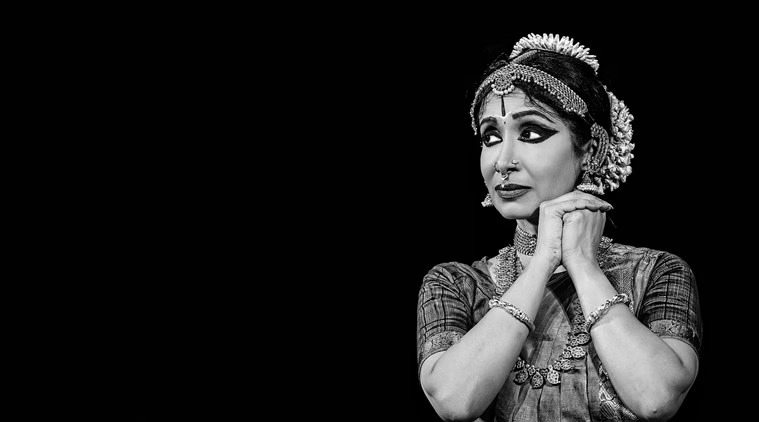
The second mode is nritya, expressive dance, in which the dancer conveys the meaning of the lyric through gesture, facial expression and the whole body. Such interpretation is called abhinaya. A dancer may render a line word by word, or expand on it through sanchari bhava, an improvised elaboration that draws in related episodes and images beyond the literal text.
The varnam
The two modes are often said to meet most fully in the varnam, usually the longest item in a dance recital and much larger than the short varnam that often opens a music concert. Passages of brisk footwork alternate with slower sections in which the dancer interprets the song. The same line of text may be explored several ways before the rhythm returns.
A common order, not the only one
Many recitals follow the margam, a sequence associated with the Tanjore Quartet, four brothers linked to the Thanjavur court. A typical version runs from alarippu and jatiswaram through the varnam to padams and a closing tillana. In a 1975 address, the dancer T. Balasaraswati compared it to a temple, entered through the alarippu, with the padams as its sanctum.
The order is not fixed. Many recitals now open with a pushpanjali, a fairly recent addition, and often omit the sabdam. Other dancers build thematic programs instead.
Names and history
The performance practices from which modern Bharatanatyam developed included sadir, cultivated by hereditary artists, among them devadasi dancers and nattuvanar teachers, in temples, at courts and in urban salons. In the 1930s and 1940s it was reshaped for the concert stage under the name Bharatanatyam. Reform campaigns led to the Madras Devadasis (Prevention of Dedication) Act, 1947, which came into force in January 1948. The historian Davesh Soneji has documented its harm to hereditary dancers’ traditions and livelihoods.
In the varnam, try following a single line of text through each of its retellings. AFA’s Archive includes Bharatanatyam appearances by Alarmel Valli, Rama Vaidyanathan, Priyadarsini Govind, Shwetha Prachande, and more. These are listed in the Archive.


For short introductions to Bharatanatyam and other forms, see Meet the Art Forms.

